ATA Chemicals: Innovating Water Treatment Solutions
We are dedicated to pioneering advanced water treatment solutions for a cleaner, safer world
We offer a wide range of water treatment solutions
Meticulously developed for superior performance across various applications. We prioritise eco-friendly and sustainable formulations in all our products.
Coagulants & Flocculants
Enhancing particle removal for clearer water.
Coagulants & Flocculants
Enhancing particle removal for clearer water.
Coagulants & Flocculants
Enhancing particle removal for clearer water.
Corrosion Inhibitors
Protecting infrastructure and extending asset life.
Corrosion Inhibitors
Protecting infrastructure and extending asset life.
Corrosion Inhibitors
Protecting infrastructure and extending asset life.
Optimized Fees
Benefit from some of the lowest fees on the market.
Optimized Fees
Benefit from some of the lowest fees on the market.
Disinfectants & Biocides
Ensuring microbial control for safe water.
Disinfectants & Biocides
Ensuring microbial control for safe water.
Disinfectants & Biocides
Ensuring microbial control for safe water.
Specialty Chemicals
Tailored solutions for industrial, municipal, and commercial needs.
Specialty Chemicals
Tailored solutions for industrial, municipal, and commercial needs.
Specialty Chemicals
Tailored solutions for industrial, municipal, and commercial needs.
Attention To Sustainability
We prioritise eco-friendly and sustainable formulations in all our products.
Attention To Sustainability
We prioritise eco-friendly and sustainable formulations in all our products.
Attention To Sustainability
We prioritise eco-friendly and sustainable formulations in all our products.
Cooling Water Treatments
Cooling Water Treatments
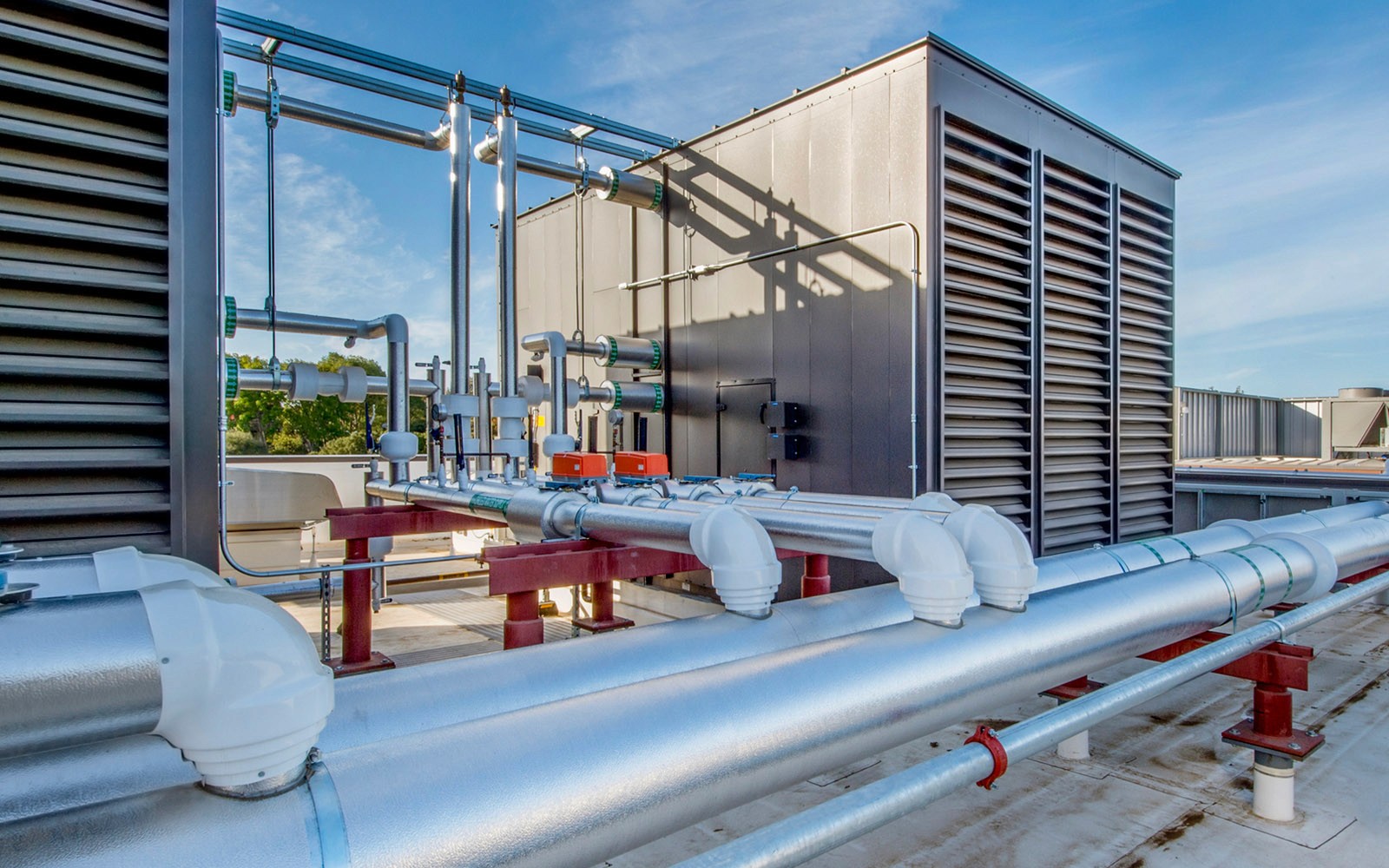
In industrial cooling water systems, treatment programs are designed to control corrosion, scaling, and microbiological growth, which are closely interconnected. Corrosion leads to metal degradation and equipment failure, influenced by water chemistry and operating conditions. Scaling occurs when dissolved salts precipitate due to evaporation and temperature increases, reducing heat transfer efficiency and promoting under-deposit corrosion. Microbiological growth forms biofilms that impair heat transfer and can cause microbiologically influenced corrosion. Effective cooling water treatment balances chemical control and monitoring of all three factors simultaneously, as poor control of one can intensify the others.
In industrial cooling water systems, treatment programs are designed to control corrosion, scaling, and microbiological growth, which are closely interconnected. Corrosion leads to metal degradation and equipment failure, influenced by water chemistry and operating conditions. Scaling occurs when dissolved salts precipitate due to evaporation and temperature increases, reducing heat transfer efficiency and promoting under-deposit corrosion. Microbiological growth forms biofilms that impair heat transfer and can cause microbiologically influenced corrosion. Effective cooling water treatment balances chemical control and monitoring of all three factors simultaneously, as poor control of one can intensify the others.
Boiler Water Treatment
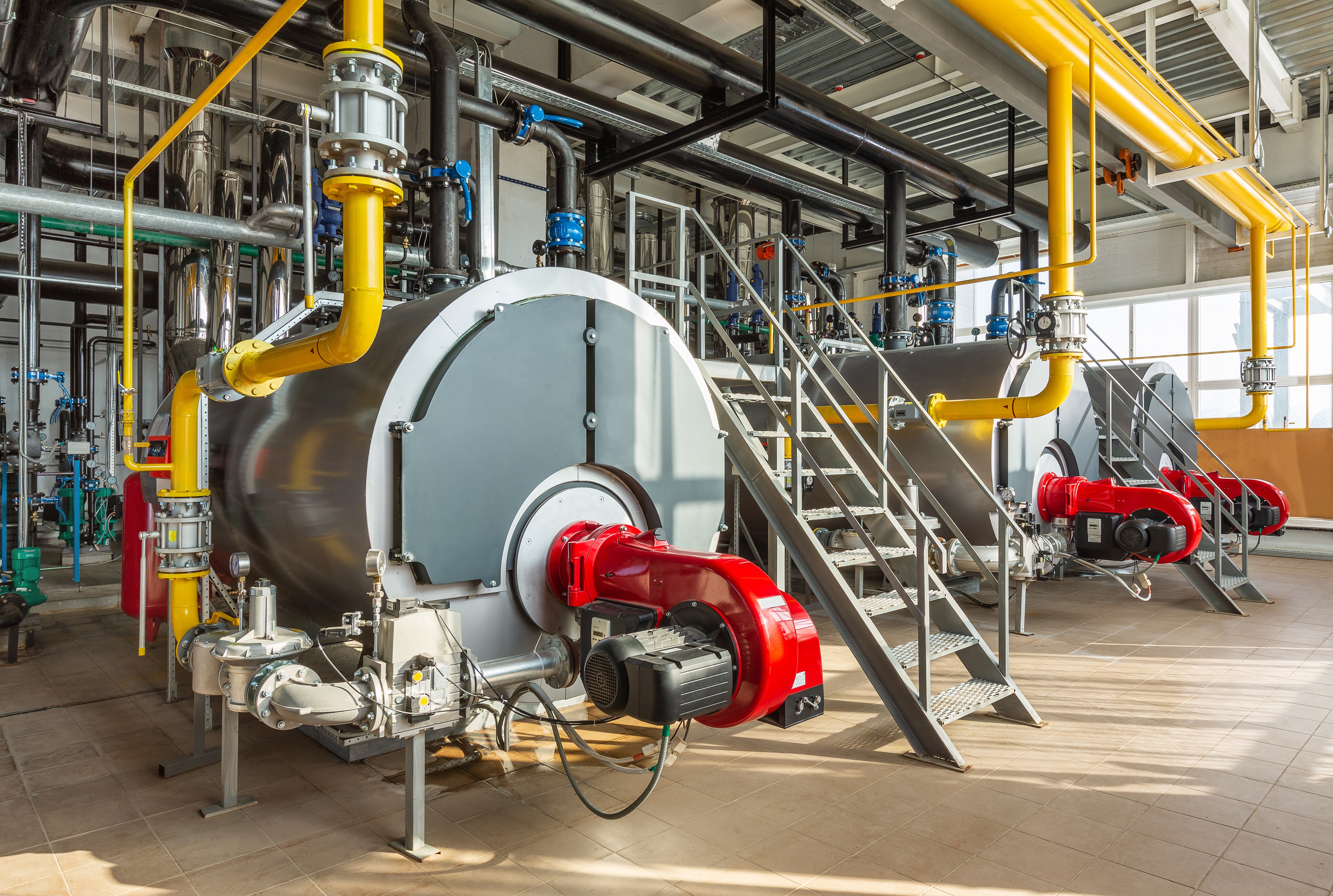
Boiler Water Treatment
Pre-Treatment
Treatment coagulants, flocculants & disinfection. If pretreatment is with RO then antiscalant, dichlorination, cleaner and biocides are used.
Oxygen Scavenger
Oxygen leads to severe corrosion in economizer section of boiler and contributes to metal transport into the boiler. There are two types of oxygen scavengers: Organic – Carbohydrazide, MEKO, DEHA Inorganic – Sulfite
Internal Treatment
Scaling, Fouling, Corrosion and Carryover can happen in boiler and hence products like Phosphate, Polymer, Antifoam are used to avoid this.
Internal Treatment
Scaling, Fouling, Corrosion and Carryover can happen in boiler and hence products like Phosphate, Polymer, Antifoam are used to avoid this.
Pre-Treatment
Treatment coagulants, flocculants & disinfection. If pretreatment is with RO then antiscalant, dichlorination, cleaner and biocides are used.
Oxygen Scavenger
Oxygen leads to severe corrosion in economizer section of boiler and contributes to metal transport into the boiler. There are two types of oxygen scavengers: Organic – Carbohydrazide, MEKO, DEHA Inorganic – Sulfite
Internal Treatment
Scaling, Fouling, Corrosion and Carryover can happen in boiler and hence products like Phosphate, Polymer, Antifoam are used to avoid this.
Internal Treatment
Scaling, Fouling, Corrosion and Carryover can happen in boiler and hence products like Phosphate, Polymer, Antifoam are used to avoid this.
Pre-Treatment
Treatment coagulants, flocculants & disinfection. If pretreatment is with RO then antiscalant, dichlorination, cleaner and biocides are used.
Oxygen Scavenger
Oxygen leads to severe corrosion in economizer section of boiler and contributes to metal transport into the boiler. There are two types of oxygen scavengers: Organic – Carbohydrazide, MEKO, DEHA Inorganic – Sulfite
Internal Treatment
Scaling, Fouling, Corrosion and Carryover can happen in boiler and hence products like Phosphate, Polymer, Antifoam are used to avoid this.
Internal Treatment
Scaling, Fouling, Corrosion and Carryover can happen in boiler and hence products like Phosphate, Polymer, Antifoam are used to avoid this.
Reverse Osmosis
Reverse Osmosis
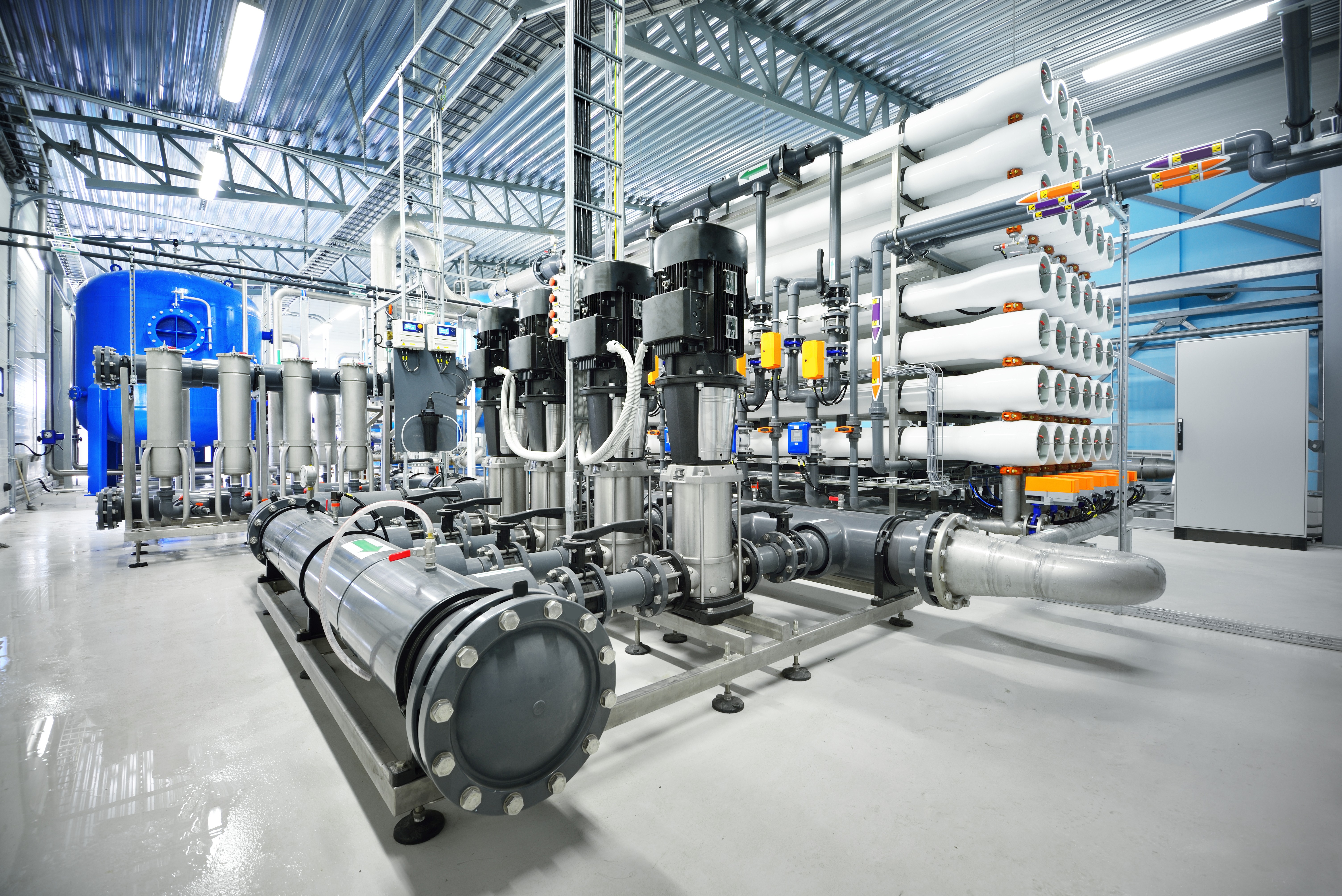
Reverse Osmosis (RO) is a sophisticated water purification technology used extensively in industrial applications to remove ions, molecules, and larger particles from water. Unlike natural osmosis, which moves water from a low-concentration solution to a high-concentration one, industrial RO uses high-pressure pumps to reverse this process.
Reverse Osmosis (RO) is a sophisticated water purification technology used extensively in industrial applications to remove ions, molecules, and larger particles from water. Unlike natural osmosis, which moves water from a low-concentration solution to a high-concentration one, industrial RO uses high-pressure pumps to reverse this process.
High-Pressure Filtration
Raw water is forced under high pressure through a semi-permeable membrane. These membranes feature microscopic pores (approximately $0.0001 \mu m$) that allow only water molecules to pass through.
Contaminant Rejection
As the water flows through the membrane layers, up to 99% of dissolved salts, organics, bacteria, and suspended solids are blocked and diverted.
The Two Streams
Permeate: The high-purity, filtered water ready for industrial use. Concentrate (Brine): The waste stream containing the rejected impurities, which is safely discharged or recycled.
Why It's Critical
Industrial RO systems are essential for ensuring the longevity of equipment by preventing scaling and corrosion in boilers and cooling towers, providing the ultra-pure water required for pharmaceutical production, food processing, and power generation.
High-Pressure Filtration
Raw water is forced under high pressure through a semi-permeable membrane. These membranes feature microscopic pores (approximately $0.0001 \mu m$) that allow only water molecules to pass through.
Contaminant Rejection
As the water flows through the membrane layers, up to 99% of dissolved salts, organics, bacteria, and suspended solids are blocked and diverted.
The Two Streams
Permeate: The high-purity, filtered water ready for industrial use. Concentrate (Brine): The waste stream containing the rejected impurities, which is safely discharged or recycled.
Why It's Critical
Industrial RO systems are essential for ensuring the longevity of equipment by preventing scaling and corrosion in boilers and cooling towers, providing the ultra-pure water required for pharmaceutical production, food processing, and power generation.
High-Pressure Filtration
Raw water is forced under high pressure through a semi-permeable membrane. These membranes feature microscopic pores (approximately $0.0001 \mu m$) that allow only water molecules to pass through.
Contaminant Rejection
As the water flows through the membrane layers, up to 99% of dissolved salts, organics, bacteria, and suspended solids are blocked and diverted.
The Two Streams
Permeate: The high-purity, filtered water ready for industrial use. Concentrate (Brine): The waste stream containing the rejected impurities, which is safely discharged or recycled.
Why It's Critical
Industrial RO systems are essential for ensuring the longevity of equipment by preventing scaling and corrosion in boilers and cooling towers, providing the ultra-pure water required for pharmaceutical production, food processing, and power generation.
Clarification Treatment
Clarification Treatment
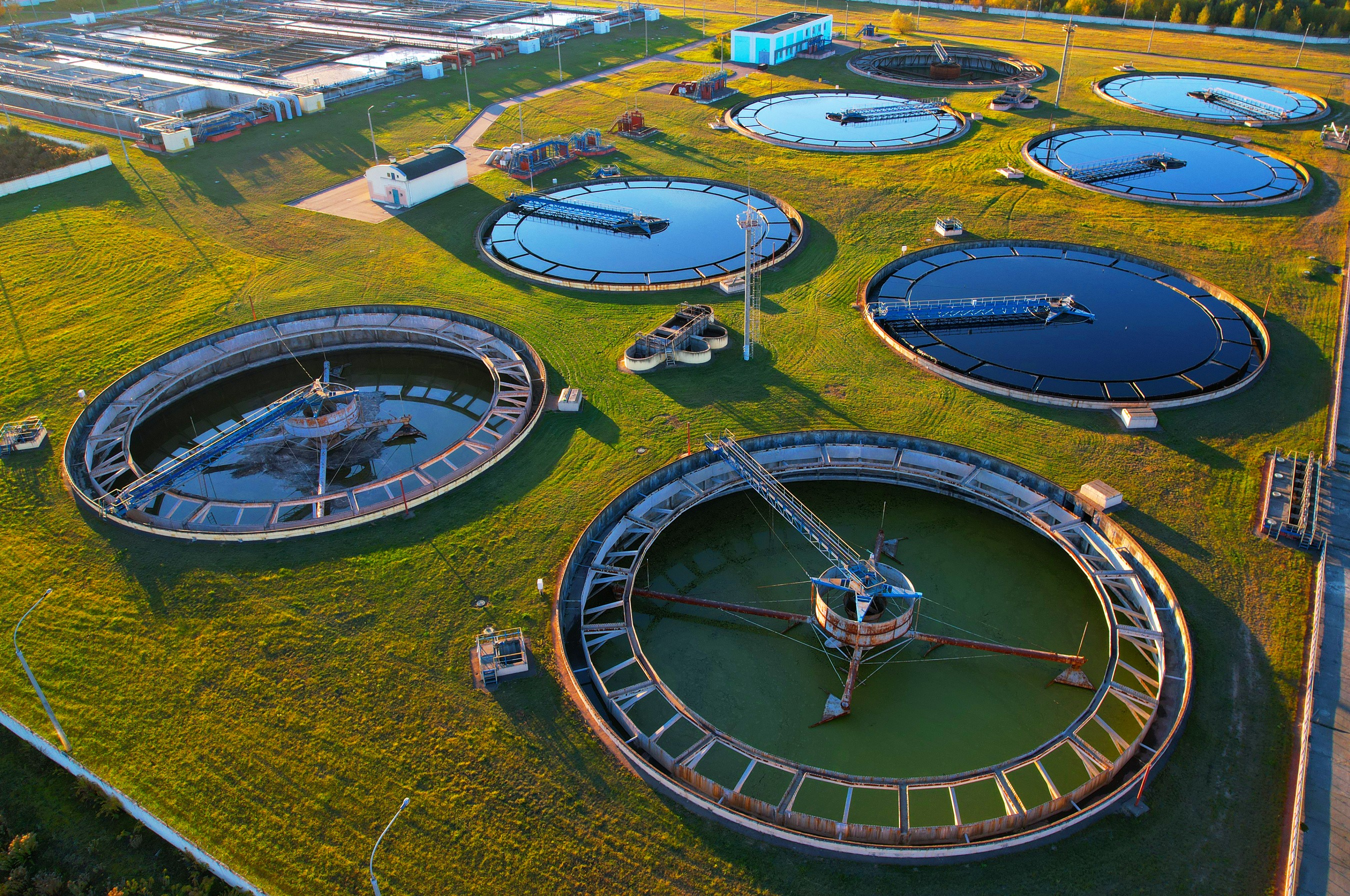
Clarification is a fundamental multi-stage pretreatment process used in industrial water treatment to remove suspended solids, turbidity, and color. Its primary goal is to produce clear water by eliminating particulate matter that could cause fouling or interfere with processes like Reverse Osmosis.
1. Coagulation: Chemical reagents neutralize the electrical charges of fine particles, allowing them to stop repelling each other and begin to clump.
2. Flocculation: Gentle mixing encourages these small clumps to collide and bond, forming larger, heavier particles known as "flocs."
3. Sedimentation: The water flow slows down, allowing gravity to pull the heavy flocs to the bottom for removal, leaving clear water at the surface.
Clarification is a fundamental multi-stage pretreatment process used in industrial water treatment to remove suspended solids, turbidity, and color. Its primary goal is to produce clear water by eliminating particulate matter that could cause fouling or interfere with processes like Reverse Osmosis.
1. Coagulation: Chemical reagents neutralize the electrical charges of fine particles, allowing them to stop repelling each other and begin to clump.
2. Flocculation: Gentle mixing encourages these small clumps to collide and bond, forming larger, heavier particles known as "flocs."
3. Sedimentation: The water flow slows down, allowing gravity to pull the heavy flocs to the bottom for removal, leaving clear water at the surface.
Commitment to Excellence and Sustainability
ATA Chemicals stands firm on its dual commitment to unparalleled quality and responsible environmental stewardship.
Rigorous Quality Assurance
Our products adhere to the highest international standards, backed by ISO 9001 and ASTM certifications.
Rigorous Quality Assurance
Our products adhere to the highest international standards, backed by ISO 9001 and ASTM certifications.
Rigorous Quality Assurance
Our products adhere to the highest international standards, backed by ISO 9001 and ASTM certifications.
Sustainable Initiatives
We actively reduce waste, optimise energy use, and develop chemicals with minimal environmental footprints.
Sustainable Initiatives
We actively reduce waste, optimise energy use, and develop chemicals with minimal environmental footprints.
Sustainable Initiatives
We actively reduce waste, optimise energy use, and develop chemicals with minimal environmental footprints.
Environmental Impact
Our solutions contribute significantly to water conservation and the protection of aquatic ecosystems.
Environmental Impact
Our solutions contribute significantly to water conservation and the protection of aquatic ecosystems.
Environmental Impact
Our solutions contribute significantly to water conservation and the protection of aquatic ecosystems.
Why Partnering With Us?
Why Partnering With Us?
Our distinct advantages make us the preferred choice for reliable and forward-thinking water treatment solutions.
Our distinct advantages make us the preferred choice for reliable and forward-thinking water treatment solutions.
Advanced R&D
Custom Product Development
Robust Supply Chain
Advanced R&D
Custom Product Development
Robust Supply Chain
Advanced R&D
Custom Product Development
Robust Supply Chain
Sustainability at Core
Customer-centric Approach
Sustainability at Core
Customer-centric Approach
Sustainability at Core
Customer-centric Approach